
Start with the jobs that can still change
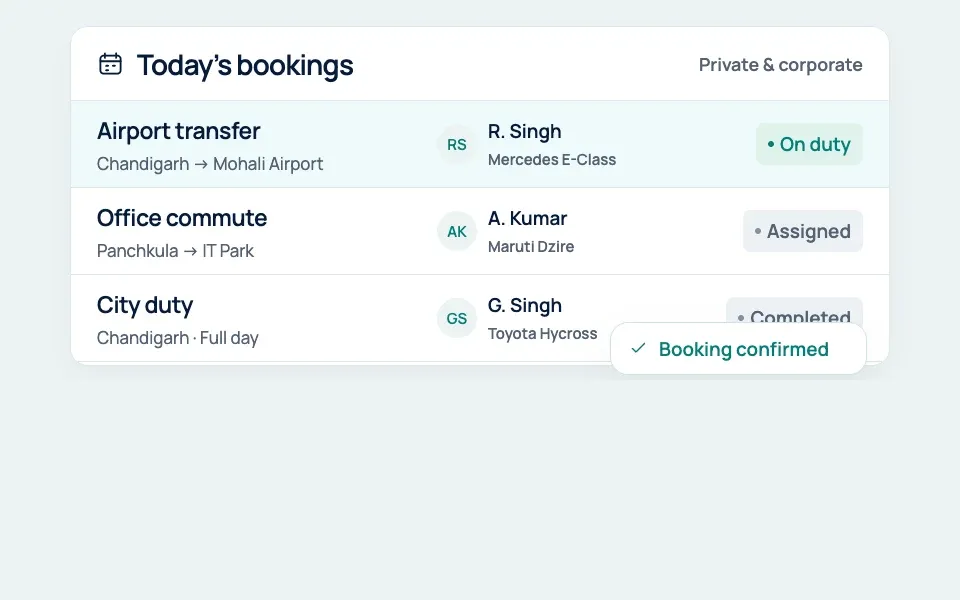
The first hour in a transport office can decide the tone of the whole day. A pickup moves forward, a driver calls in sick, or a vehicle is still out on an overnight duty. Before dispatch starts, review today’s bookings alongside the duties carried over from yesterday.
Look for missing pickup details, unassigned work and timings that leave too little room between trips. A booking marked confirmed still needs a clear passenger contact, pickup point, vehicle requirement and reporting time. Decide who will resolve each gap instead of leaving the team to notice it later.
Check availability before making promises
A familiar driver name or a parked vehicle can be a misleading shortcut. Confirm attendance, the driver’s current duty and the vehicle’s assignment before committing either to a passenger. Include the time needed to reach the next pickup and any handover between drivers.
Keep the assignment in the same place as the booking. If something changes, update that record and make sure the driver has the revised details. The office should be able to answer “who is handling this trip?” without finding the person who last spoke on the phone.
Collect evidence while the work is happening
Fuel receipts and odometer readings are much easier to understand when they are captured at the time. Ask drivers to submit a legible fuel-bill photo and the required odometer evidence through the agreed workflow. Keep the vehicle, date and duty context with the submission.
Make the habit easy to follow. A clear photo is more useful than several rushed ones, and a short explanation of an unusual reading can save a second conversation. Drivers should make submissions while safely parked. A good process should never require using a phone while driving.
Review exceptions before the office closes
Set aside a short review window for incomplete duties, missing readings, rejected documents and unrecorded expenses. These are the details most likely to turn into a billing question a week later. Check the underlying record before asking a driver to submit it again.
Leave a clear note where an item needs a follow-up. Record what is missing, who is handling it and what the next action is. The next shift should inherit a workable list, rather than a collection of conversations.
Finish with tomorrow’s first departures
Before the final handover, review the next morning’s early pickups. Confirm assignments, reporting instructions and any special passenger requirements. A small check at the end of today is often easier than a rushed call before sunrise.
CabNexus brings bookings, attendance, assignments, fuel records and duty details into one workflow. The aim is practical: help your team spend less time assembling the day’s information and more time acting on it. Start with a routine your team can keep, then use your records to improve it.